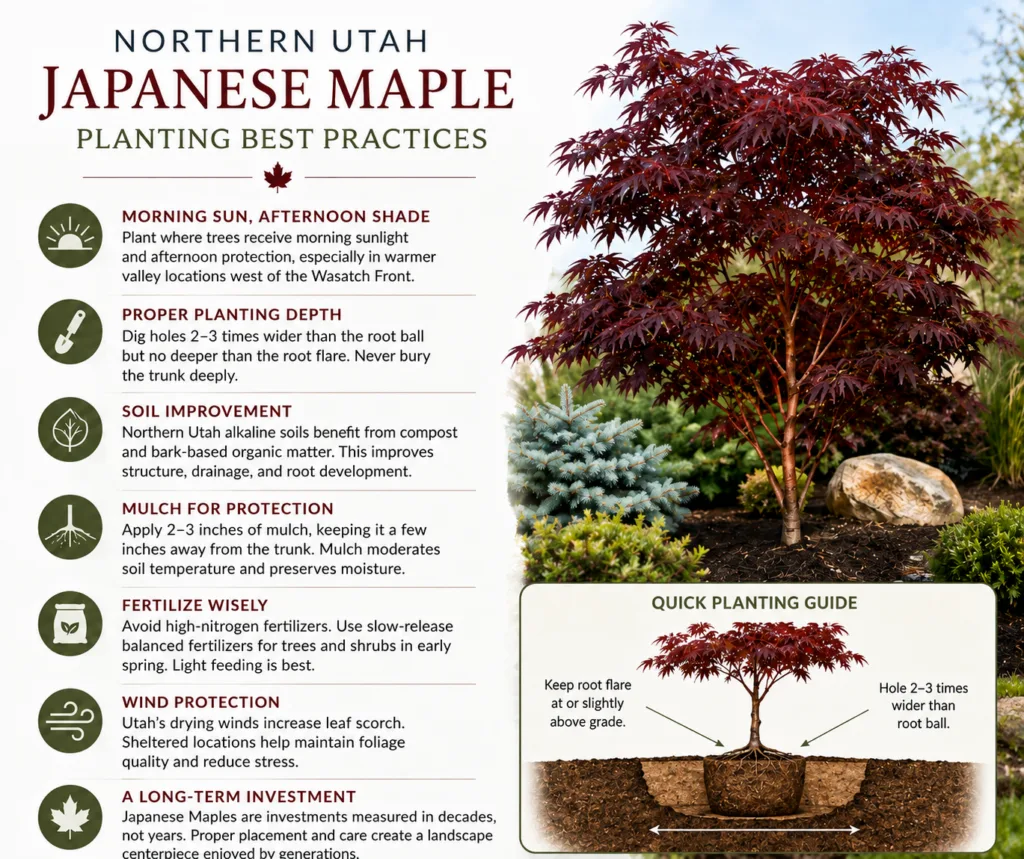
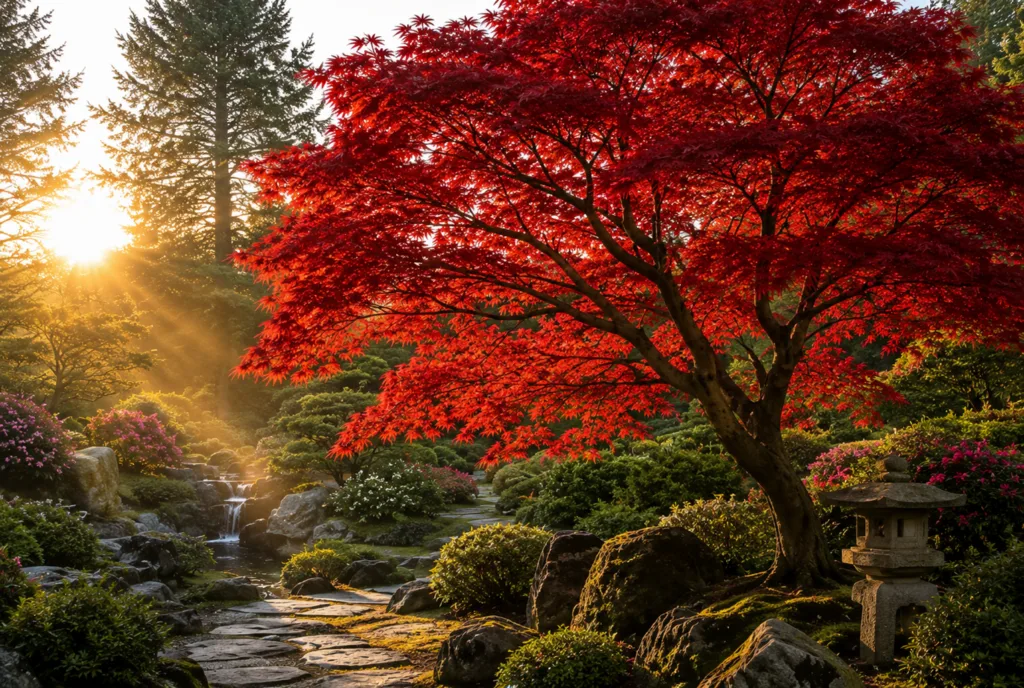
Japanese Maples (Acer palmatum) have been admired for centuries as living works of art, treasured in traditional Japanese gardens as symbols of balance, peace, elegance, and the ever-changing beauty of the seasons. Cultivated in Japan for hundreds of years before becoming beloved landscape trees throughout Western gardens in the 1800s, Japanese Maples continue to captivate gardeners with their graceful branching structure, delicate foliage, and extraordinary seasonal color transformations. More than simply ornamental trees, they are often considered legacy plantings—trees planted not only for today’s enjoyment but for future generations—as a healthy Japanese Maple can commonly live 60 to well over 100 years when properly cared for. Their value in the landscape extends far beyond beauty, bringing four seasons of visual interest, cooling shade, enhanced curb appeal, and a premium, established appearance to patios, entryways, water features, and garden spaces while serving as elegant focal points unlike almost any other ornamental tree. In Northern Utah’s growing conditions, where Zones 5–7 bring alkaline soils, hot dry summers, intense afternoon sunlight, and winter winds, proper placement becomes especially important. Japanese Maples thrive when protected from reflected heat and harsh western exposure, and incorporating organic soil amendments and mulch can greatly improve long-term success, helping these remarkable trees reward homeowners with decades of beauty and character.
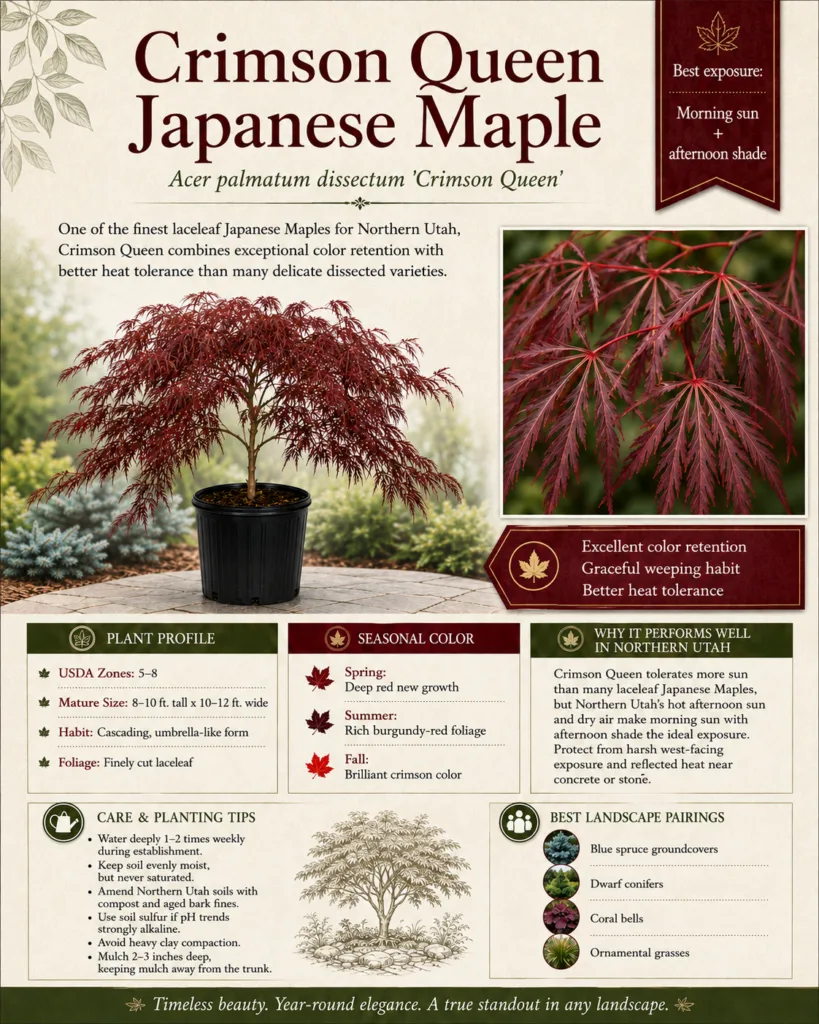
Crimson Queen Japanese Maple (Acer palmatum dissectum ‘Crimson Queen’)
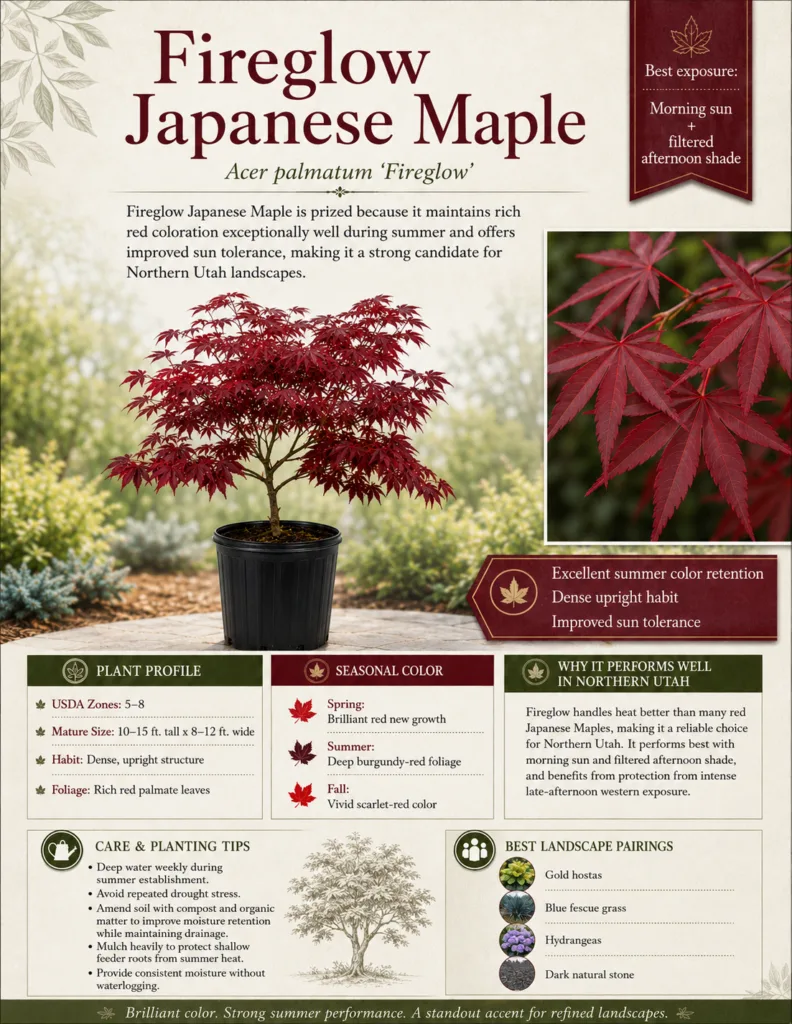
Fireglow Japanese Maple (Acer palmatum ‘Fireglow’)
Weeping Green Japanese Maple (Acer palmatum dissectum viridis group)
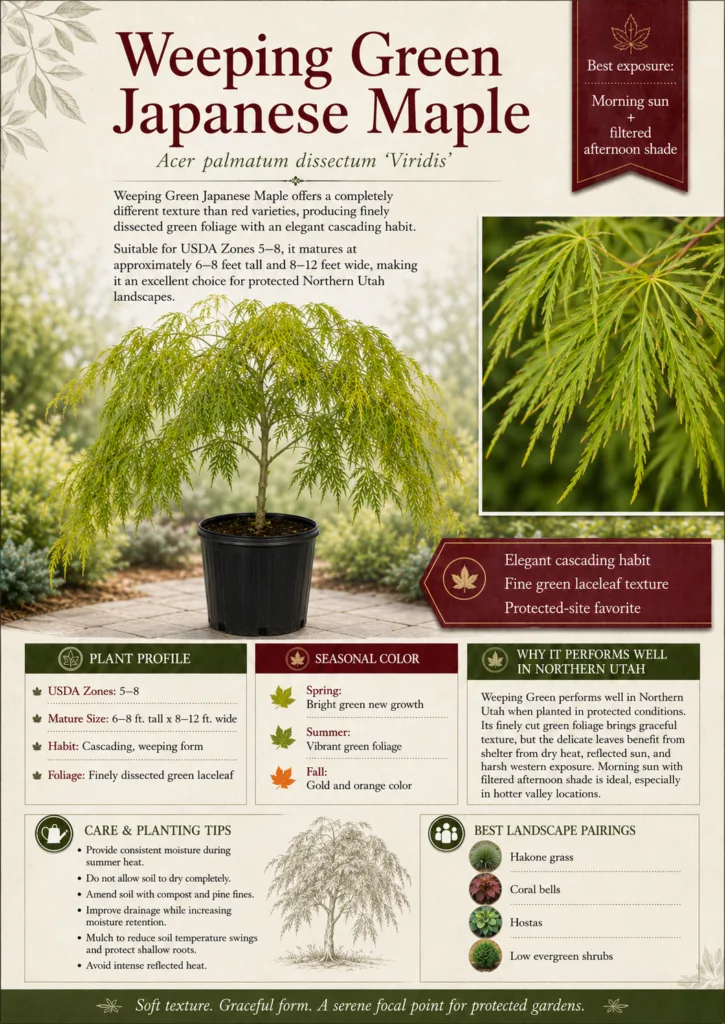
Bloodgood Japanese Maple (Acer palmatum ‘Bloodgood’)
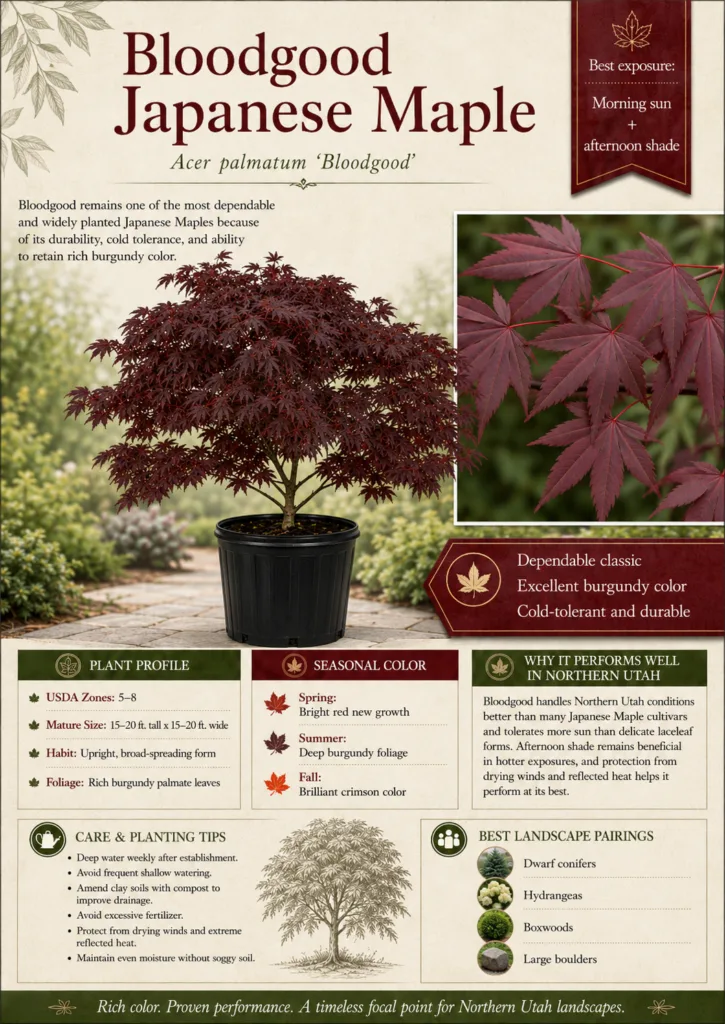
Emperor Japanese Maple (Acer palmatum ‘Emperor I’ / Wolff)
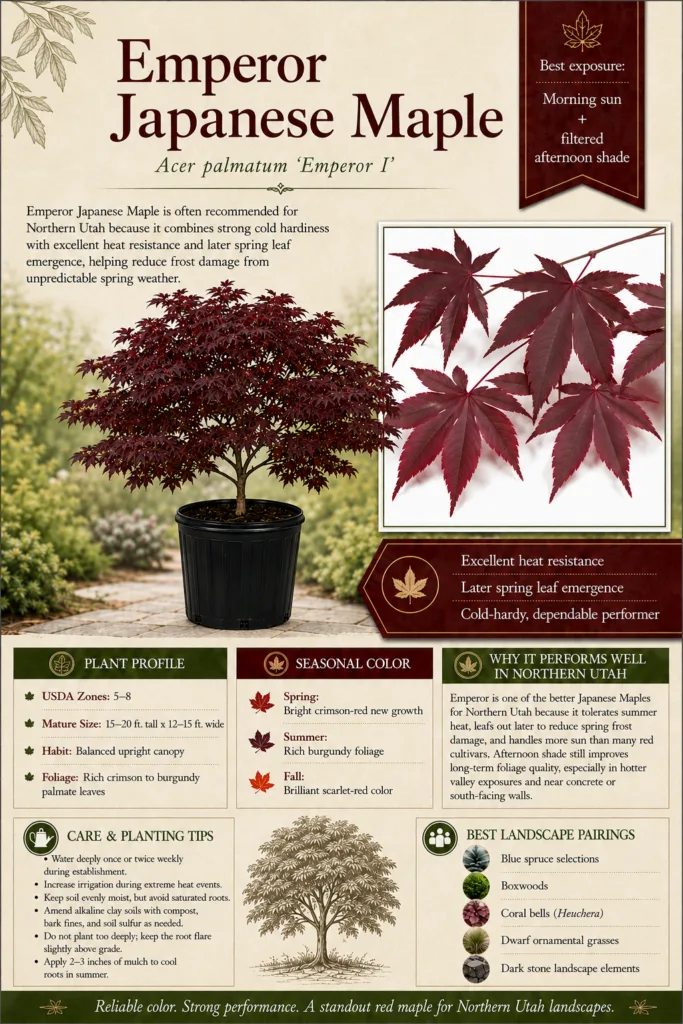
Tamukeyama Japanese Maple (Acer palmatum dissectum ‘Tamukeyama’)
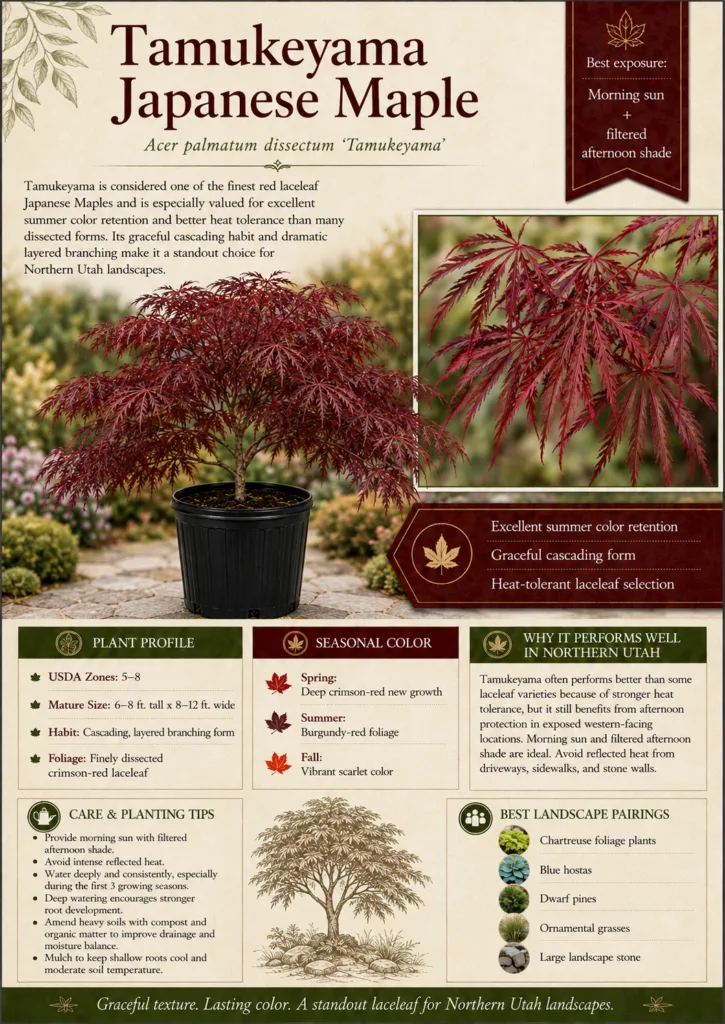
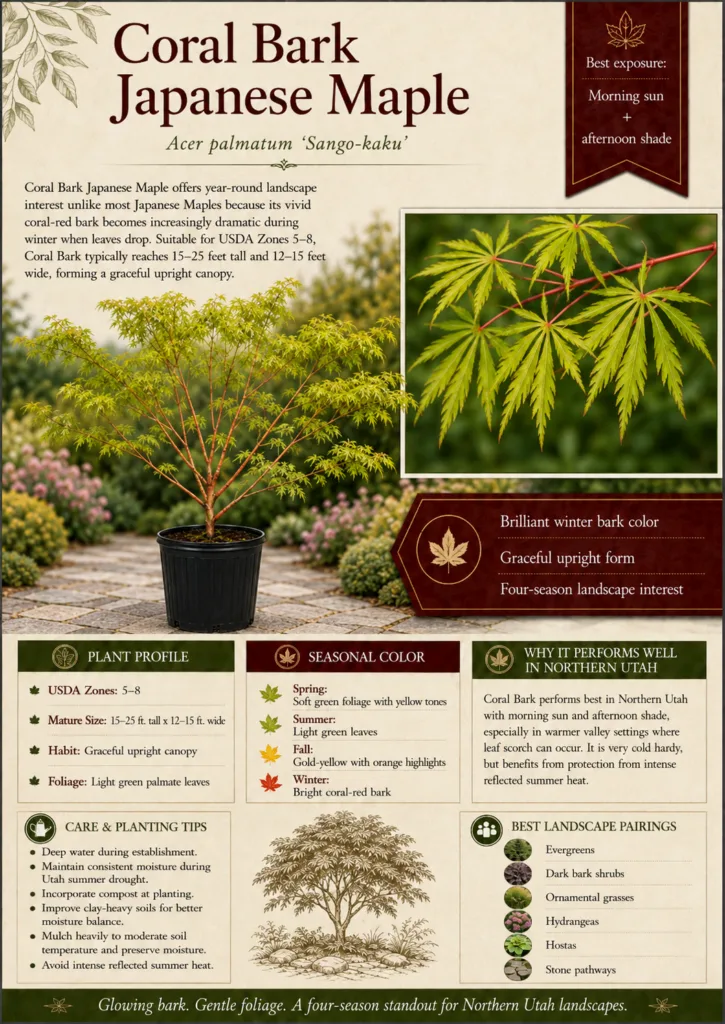
Coral Bark Japanese Maple (Acer palmatum ‘Sango-kaku’)
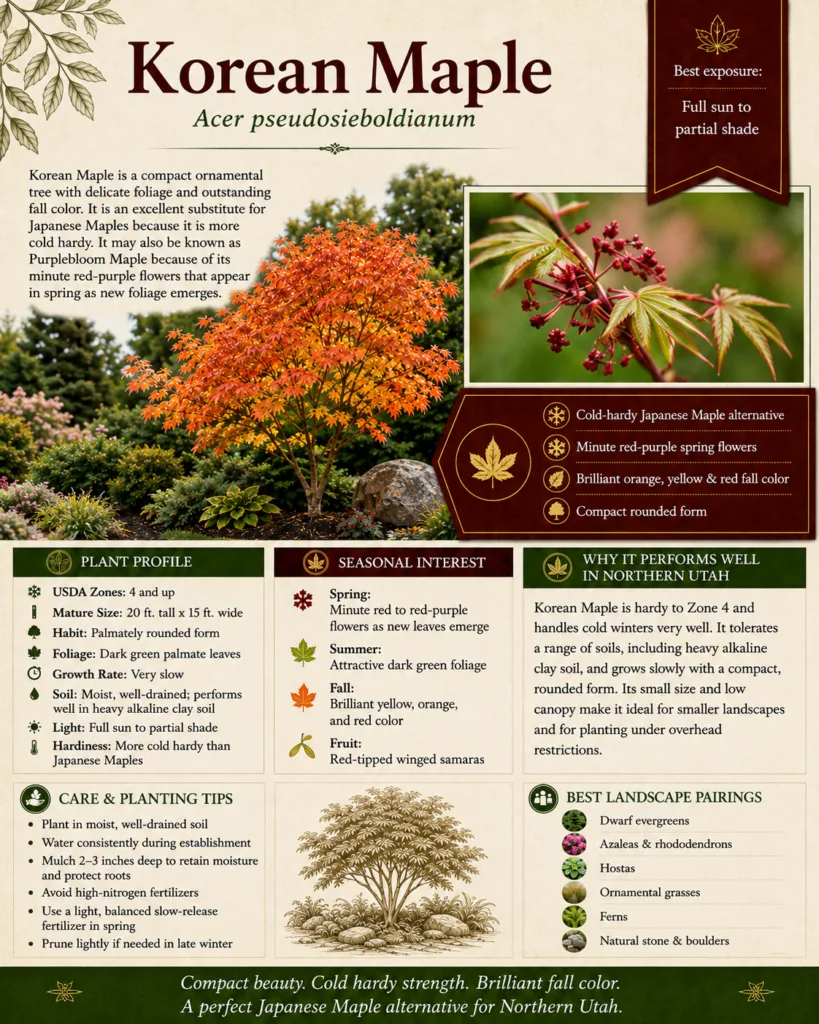
Korean Maple (Acer Pseudosieboldianum)
Northern Utah Japanese Maple Planting Best Practices