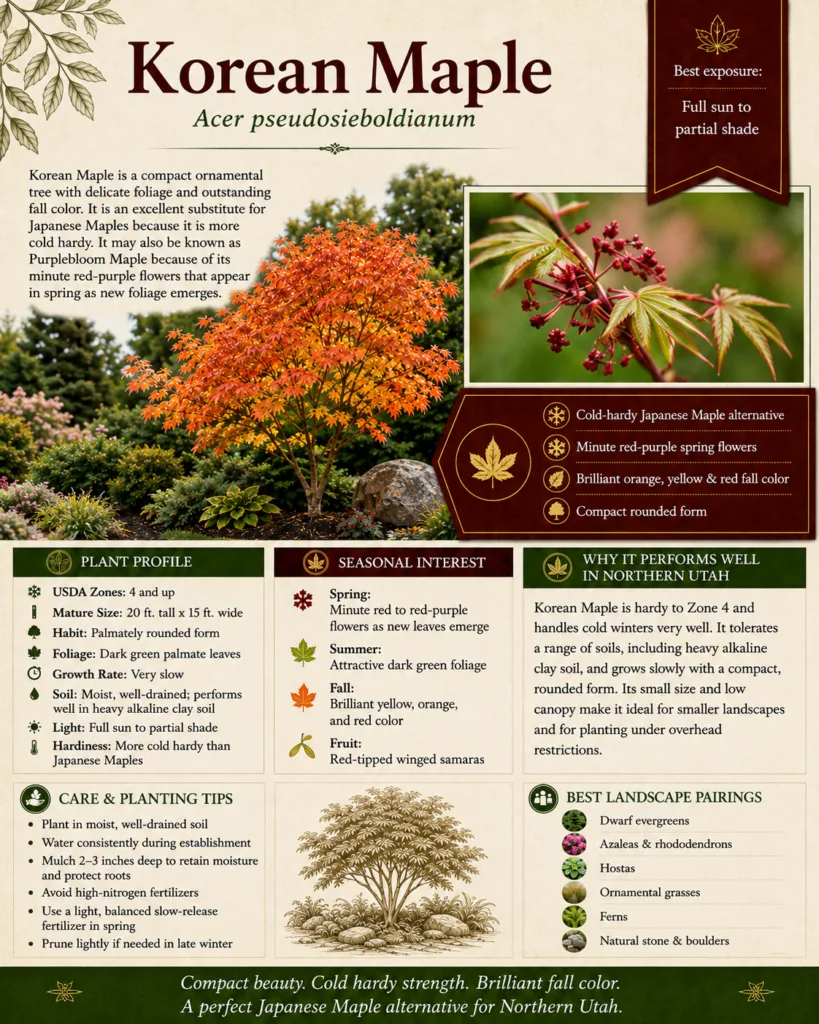
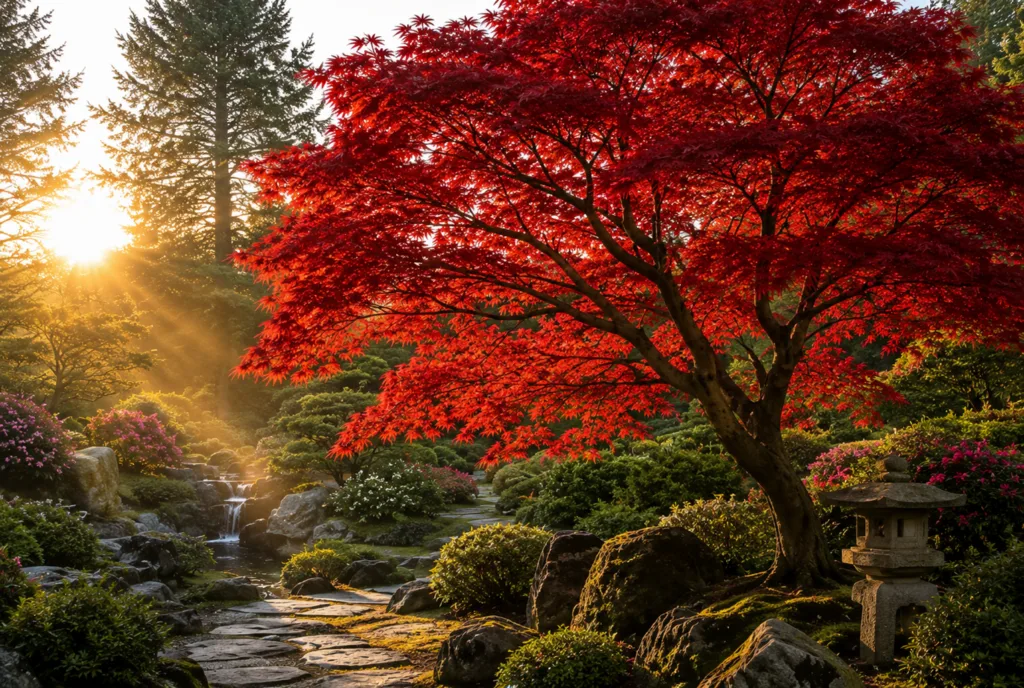
Japanese Maples (Acer palmatum) have been admired for centuries as living works of art, treasured in traditional Japanese gardens as symbols of balance, peace, elegance, and the ever-changing beauty of the seasons. Cultivated in Japan for hundreds of years before becoming beloved landscape trees throughout Western gardens in the 1800s, Japanese Maples continue to captivate gardeners with their graceful branching structure, delicate foliage, and extraordinary seasonal color transformations. More than simply ornamental trees, they are often considered legacy plantings—trees planted not only for today’s enjoyment but for future generations—as a healthy Japanese Maple can commonly live 60 to well over 100 years when properly cared for. Their value in the landscape extends far beyond beauty, bringing four seasons of visual interest, cooling shade, enhanced curb appeal, and a premium, established appearance to patios, entryways, water features, and garden spaces while serving as elegant focal points unlike almost any other ornamental tree. In Northern Utah’s growing conditions, where Zones 5–7 bring alkaline soils, hot dry summers, intense afternoon sunlight, and winter winds, proper placement becomes especially important. Japanese Maples thrive when protected from reflected heat and harsh western exposure, and incorporating organic soil amendments and mulch can greatly improve long-term success, helping these remarkable trees reward homeowners with decades of beauty and character.
Crimson Queen Japanese Maple (Acer palmatum dissectum ‘Crimson Queen’)
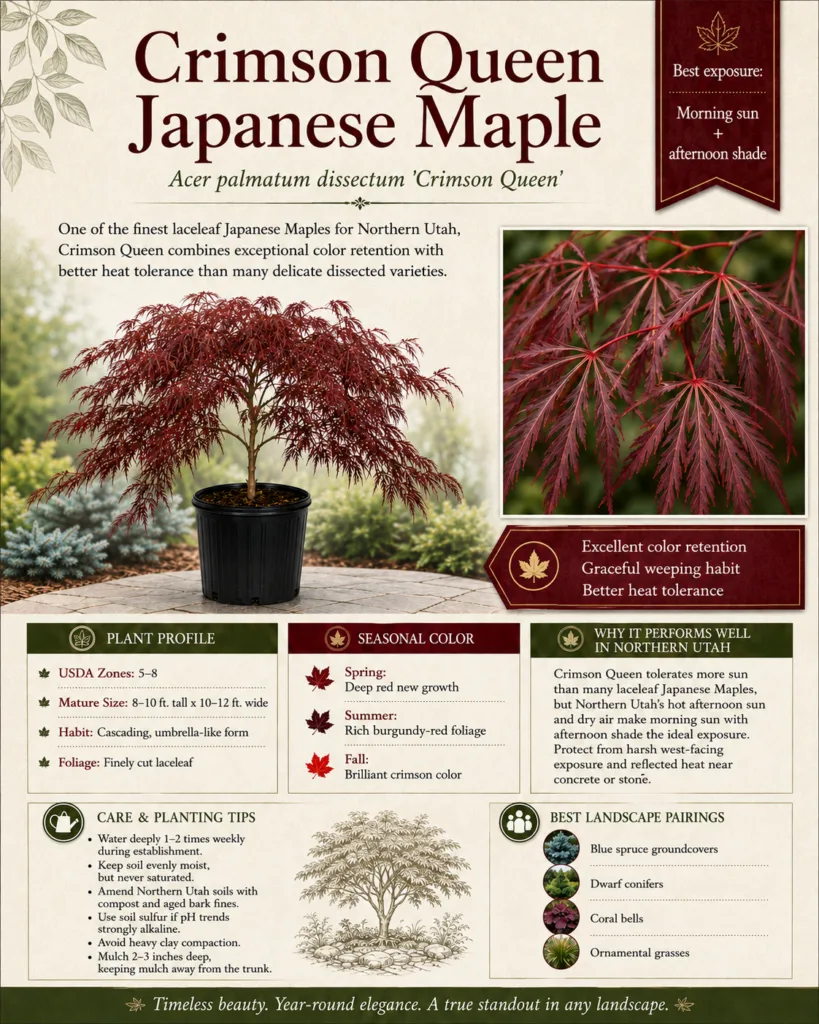
Crimson Queen is one of the finest laceleaf Japanese Maples for Northern Utah because it combines exceptional color retention with better heat tolerance than many delicate dissected varieties. It grows in USDA Zones 5–8, making it suitable for most populated Northern Utah growing regions. Mature size reaches approximately 8–10 feet tall and 10–12 feet wide, forming a cascading umbrella-like habit with finely cut foliage. Spring growth emerges deep red, matures into burgundy red through summer, and develops brilliant crimson fall color. Crimson Queen tolerates more sun than many laceleaf Japanese Maples, but Northern Utah’s hot afternoon sun and dry air mean it performs best with morning sun and afternoon shade, particularly west-facing exposure protection. It tolerates heat reasonably well but benefits from shelter from reflected heat near concrete or stone. Water deeply 1–2 times weekly during establishment and maintain evenly moist soil without saturation. Northern Utah soils often benefit from planting amendments including compost, aged bark fines, and soil sulfur if pH trends strongly alkaline. Avoid heavy clay compaction. Mulch 2–3 inches deep without touching the trunk. Crimson Queen pairs exceptionally well with blue spruce groundcovers, dwarf conifers, coral bells, and ornamental grasses.
Fireglow Japanese Maple (Acer palmatum ‘Fireglow’)
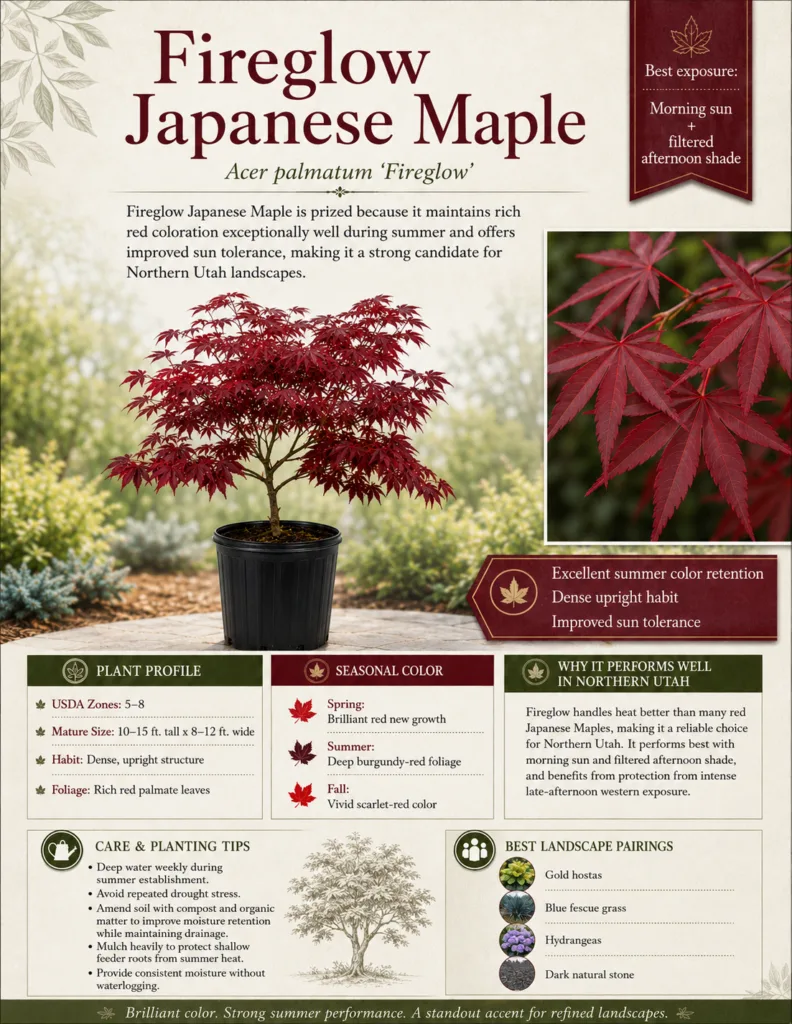
Fireglow Japanese Maple is prized because it maintains rich red coloration exceptionally well during summer and offers improved sun tolerance, making it a strong candidate for Northern Utah landscapes. Suitable for USDA Zones 5–8, Fireglow typically reaches 10–15 feet tall and 8–12 feet wide with a dense upright structure. Foliage emerges brilliant red in spring, holds deep burgundy red through summer, then finishes with vivid scarlet-red fall color. Northern Utah gardeners will appreciate that Fireglow handles heat better than many red Japanese Maples, though protection from intense late-afternoon western exposure remains beneficial. Morning sun with filtered afternoon shade is ideal. Deep watering weekly during summer establishment is important because Japanese Maples dislike repeated drought stress. Improve Northern Utah soils using compost and organic matter to increase moisture retention while maintaining drainage. Mulch heavily to protect shallow feeder roots from Utah summer heat. Fireglow pairs beautifully with gold hostas, blue fescue grass, hydrangeas, and dark natural stone.
Weeping Green Japanese Maple (Acer palmatum dissectum viridis group)
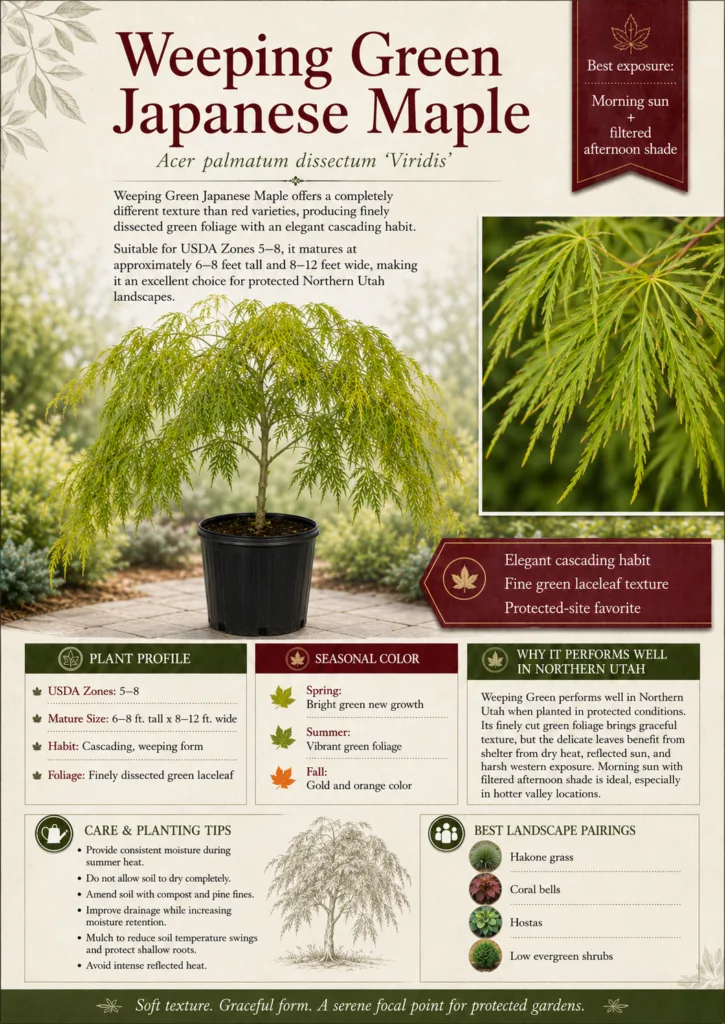
Weeping Green Japanese Maple offers a completely different texture than red varieties, producing finely dissected green foliage with an elegant cascading habit. Suitable for USDA Zones 5–8, mature size commonly reaches 6–8 feet tall and 8–12 feet wide. Leaves emerge bright green in spring, remain vibrant through summer, then transition into gold and orange fall colors. Northern Utah conditions require more protection for green laceleaf types because thin foliage can scorch under dry heat and reflected sunlight. Ideal placement includes morning sun and filtered afternoon shade, especially in Utah’s hotter valley locations. This variety appreciates consistent moisture and should not dry completely during summer heat. Soil improvement with compost and pine fines helps moderate Utah alkalinity while improving root development. Mulching is highly recommended to reduce soil temperature swings. Companion plants include Hakone grass, coral bells, hostas, and low evergreen shrubs.
Bloodgood Japanese Maple (Acer palmatum ‘Bloodgood’)
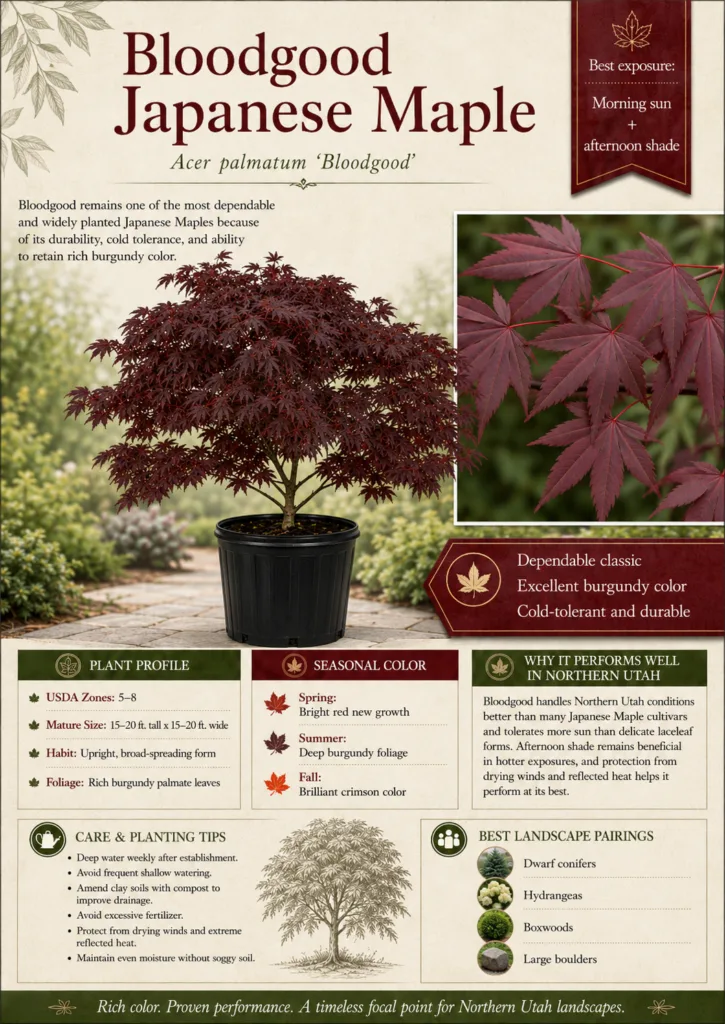
Bloodgood remains one of the most dependable and widely planted Japanese Maples because of its durability, cold tolerance, and ability to retain rich burgundy color. Suitable for USDA Zones 5–8, it matures approximately 15–20 feet tall and 15–20 feet wide. Leaves emerge bright red before developing deep burgundy summer color and brilliant crimson fall color. Bloodgood handles Northern Utah conditions better than many cultivars and tolerates more sun than delicate laceleaf forms, though afternoon shade remains beneficial in hotter exposures. It performs well in Utah when protected from drying winds and extreme reflected heat. Deep watering weekly after establishment is preferred over frequent shallow watering. Amend clay soils with compost to improve drainage while avoiding excessive fertilizer. Bloodgood makes a dramatic focal point paired with dwarf conifers, hydrangeas, boxwoods, or large boulders.
Emperor Japanese Maple (Acer palmatum ‘Emperor I’ / Wolff)
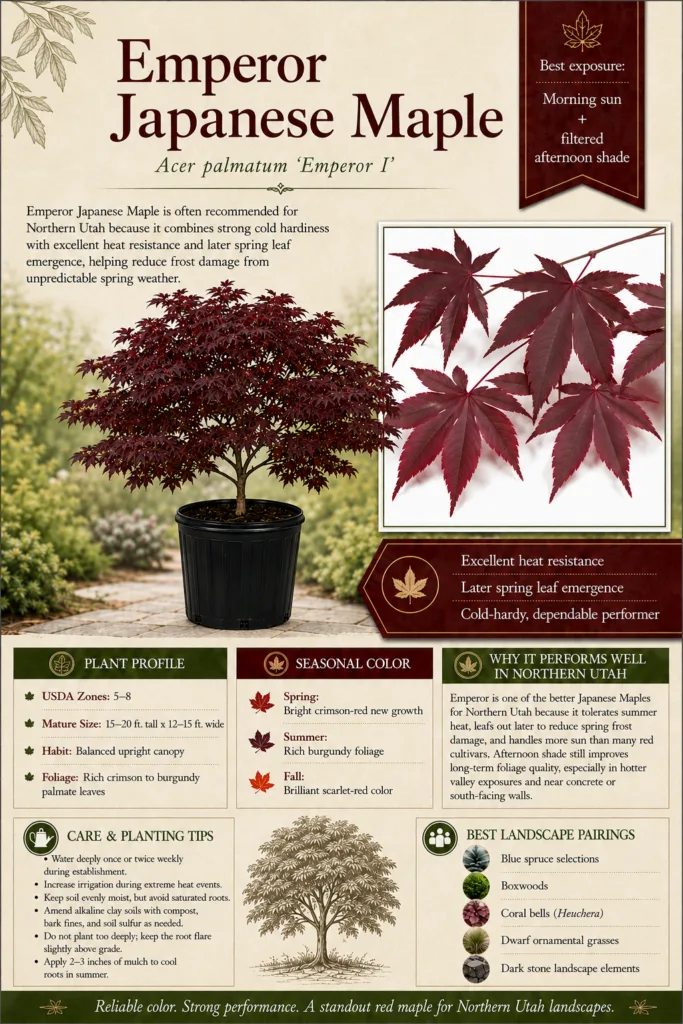
Emperor Japanese Maple is often recommended for Northern Utah because it combines strong cold hardiness with excellent heat resistance and later spring leaf emergence, helping reduce frost damage from unpredictable spring weather. Suitable for USDA Zones 5–8, it typically matures around 15–20 feet tall and 12–15 feet wide, forming a balanced upright canopy. Spring foliage emerges bright crimson-red, deepens into rich burgundy through summer, then develops brilliant scarlet-red fall color. Compared to many Japanese Maples, Emperor handles Northern Utah summer heat exceptionally well, but afternoon shade still improves long-term foliage quality, especially in hotter valley exposures or locations near concrete and south-facing walls. Morning sun with filtered afternoon protection produces the best appearance. Emperor tolerates more sun exposure than many red cultivars and is one of the better options for Utah’s dry climate when irrigation is consistent.
Water deeply once or twice weekly during establishment, increasing frequency during extreme heat events. Japanese Maples prefer evenly moist soil but dislike constantly saturated roots. Northern Utah’s common alkaline clay soils benefit from amendments including compost, bark fines, and soil sulfur where pH correction becomes necessary. Avoid planting too deeply; the root flare should remain slightly above surrounding soil grade. A 2–3 inch mulch layer greatly improves root cooling during Utah summers. Emperor pairs beautifully with blue spruce selections, boxwoods, coral bells (Heuchera), dwarf ornamental grasses, and dark stone landscape elements that highlight the red foliage.
Tamukeyama Japanese Maple (Acer palmatum dissectum ‘Tamukeyama’)
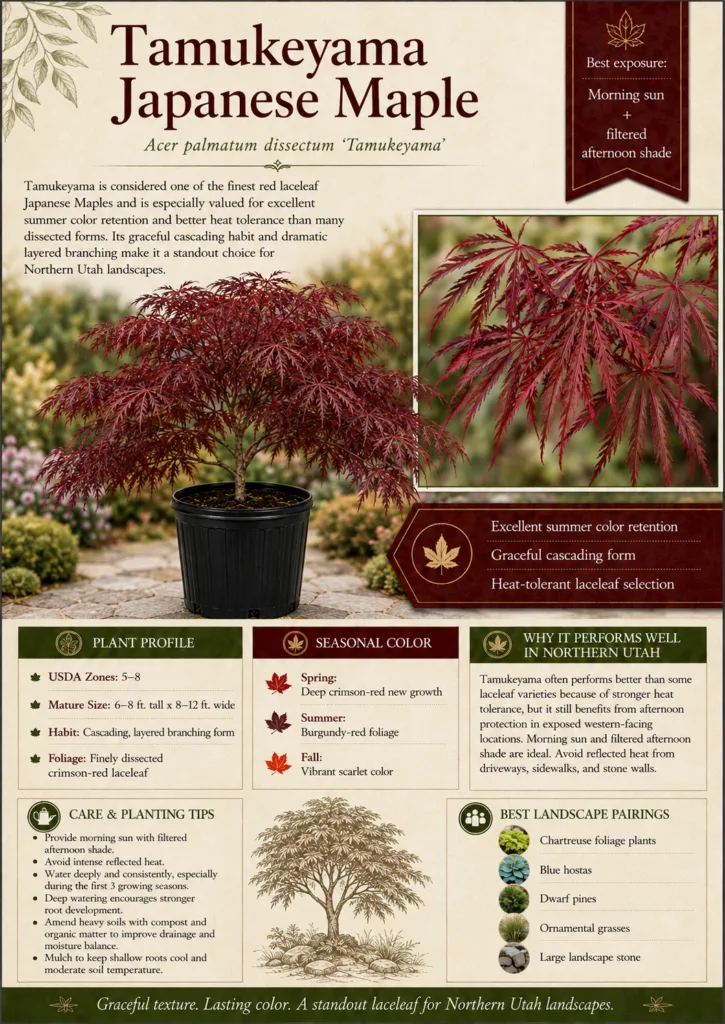
Tamukeyama is considered one of the finest red laceleaf Japanese Maples available and is especially valued because it maintains excellent summer color while tolerating heat better than many dissected forms. Suitable for USDA Zones 5–8, Tamukeyama commonly matures around 6–8 feet tall and 8–12 feet wide, developing a graceful cascading form with dramatic layered branching. Foliage emerges deep crimson-red in spring, maintains burgundy-red color throughout summer, and finishes with vibrant scarlet fall color. Northern Utah gardeners often find Tamukeyama performs better than some laceleaf varieties because of its stronger heat tolerance, though afternoon protection remains highly recommended in exposed western-facing locations.
Tamukeyama thrives with morning sunlight and filtered afternoon shade. In Northern Utah’s dry climate, reflected heat from driveways, sidewalks, and stone walls can stress foliage, so avoid placing it where intense summer heat concentrates. Water deeply and consistently, especially during the first three growing seasons. Deep watering encourages stronger root development and improved drought resistance. Amend heavy soils with compost and organic matter before planting to improve drainage and moisture balance. Mulching is especially important because shallow Japanese Maple roots benefit from cooler soil temperatures. Tamukeyama creates exceptional contrast when paired with chartreuse foliage plants, blue hostas, dwarf pines, ornamental grasses, or large landscape stone.
Coral Bark Japanese Maple (Acer palmatum ‘Sango-kaku’)
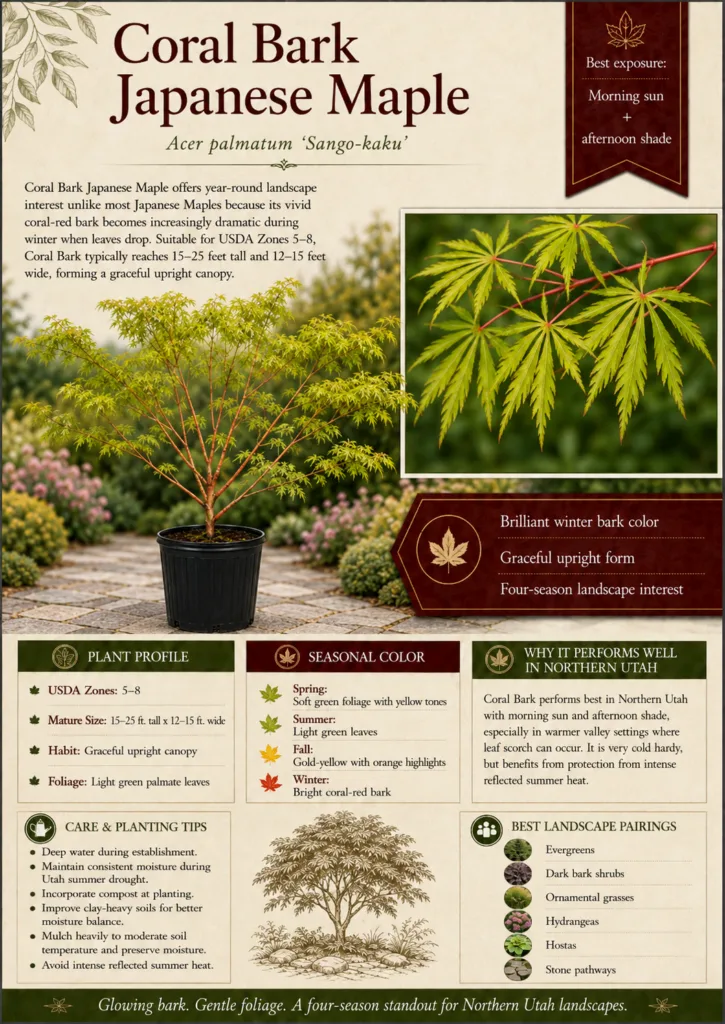
Coral Bark Japanese Maple offers year-round landscape interest unlike most Japanese Maples because its vivid coral-red bark becomes increasingly dramatic during winter when leaves drop. Suitable for USDA Zones 5–8, Coral Bark typically reaches 15–25 feet tall and 12–15 feet wide, forming a graceful upright canopy. Spring foliage emerges soft green with slight yellow tones, summer leaves remain light green, and fall color develops into striking gold and yellow with occasional orange highlights. Winter becomes the true showpiece season as younger branches glow bright coral-red against snow or dormant landscapes.
For Northern Utah conditions, Coral Bark performs best with morning sun and afternoon shade, particularly in warmer valley environments where leaf scorch becomes possible during hot dry summers. It tolerates cold winters extremely well but benefits from protection against intense reflected summer heat. Deep watering during establishment remains important, especially during extended Utah summer drought periods. Compost incorporation at planting improves root establishment and helps balance moisture retention in clay-heavy soils. Mulch heavily to moderate soil temperatures and preserve moisture. Coral Bark pairs exceptionally well with evergreens, dark bark shrubs, ornamental grasses, hydrangeas, hostas, and stone pathways where winter bark color can remain highly visible.
Northern Utah Japanese Maple Planting Best Practices
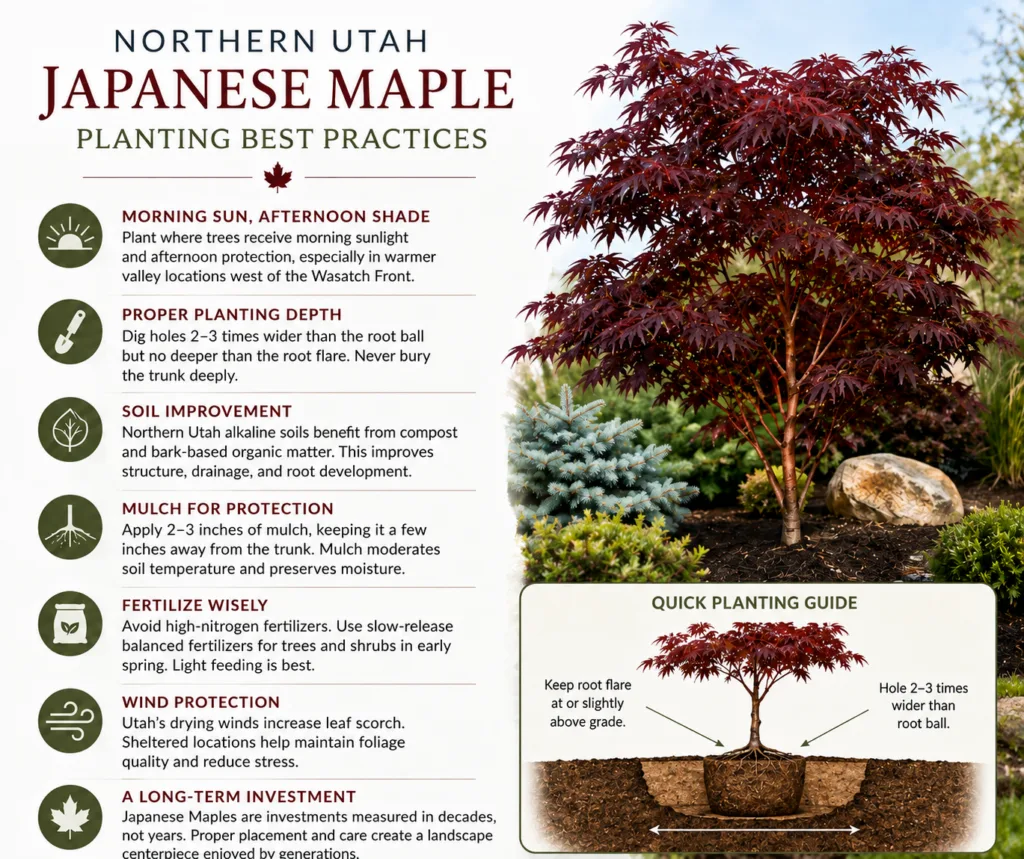
Japanese Maples in Northern Utah generally perform best when planted where they receive morning sunlight and afternoon protection, particularly west of the Wasatch Front where summer heat and dry air intensify stress. Planting holes should be approximately 2–3 times wider than the root ball but no deeper than the root flare. Avoid burying trunks deeply. Northern Utah alkaline soils commonly benefit from adding compost and bark-based organic matter before planting. Mulch 2–3 inches deep to protect shallow roots from summer heat and winter temperature swings.
Avoid high-nitrogen fertilizers because overly aggressive growth can become more susceptible to stress. Slow-release balanced fertilizers designed for trees and shrubs applied lightly in spring usually provide adequate nutrition. Wind protection also improves long-term performance because Utah’s drying winds can increase leaf scorch.
Japanese Maples are investments measured in decades rather than years. Proper placement during planting often determines whether a tree becomes a short-lived ornamental or a landscape centerpiece enjoyed by generations.