
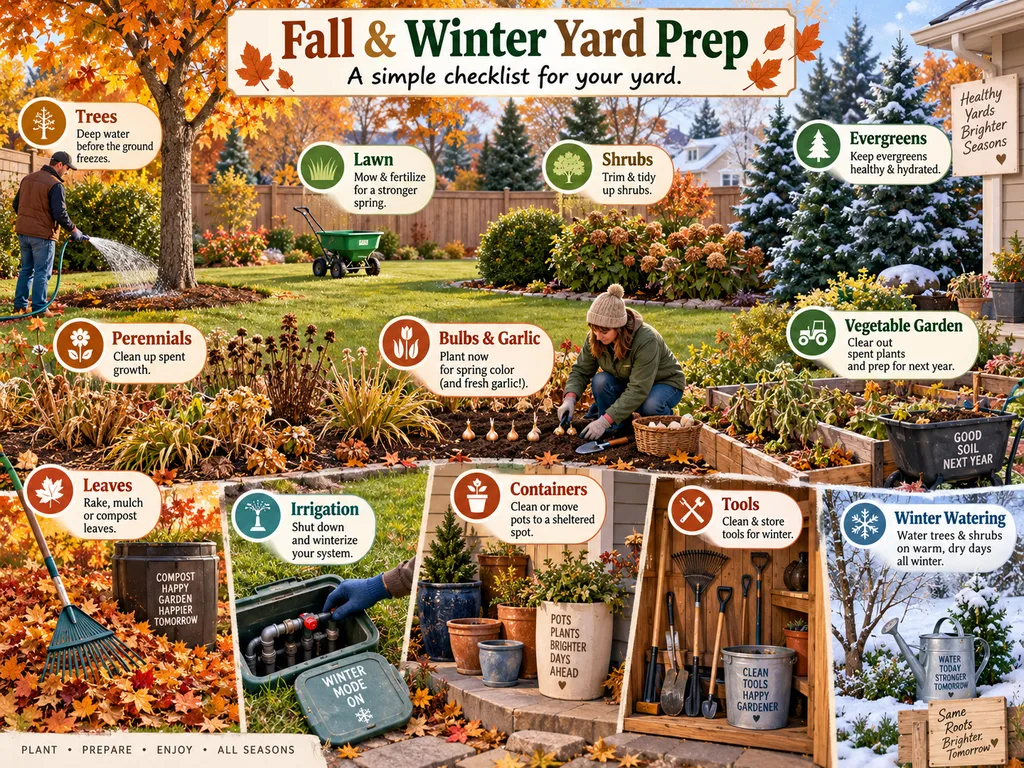
Get Your Yard Ready for Fall & Winter
Fall is one of the most important times of year for your landscape. A little preparation now can help protect your plants through winter, reduce spring problems, and give your lawn, trees, shrubs, and garden a stronger start next year.
Here is a simple fall yard checklist to help you get everything ready before cold weather arrives.
🌳 TREES
Keep Watering
One of the biggest mistakes homeowners make is stopping irrigation too early.
Trees—especially newly planted trees—should continue receiving water during dry fall weather until the ground begins to freeze.
Young trees need extra attention because their root systems have not spread far enough to find moisture on their own.
Fall Tree Checklist
- Continue deep watering during dry weather.
- Pay special attention to trees planted within the last 2–3 years.
- Water the entire root zone, not just directly against the trunk.
- Check that mulch is not piled against the trunk.
- Remove broken, dead, or badly damaged branches.
- Inspect trunks and branches for insects, disease, or unusual damage.
Protect Young Tree Trunks
Young trees can sometimes suffer winter injury from fluctuating temperatures, sun exposure, animals, or rodents.
Tree guards or appropriate trunk protection can be helpful for susceptible young trees.
Avoid wrapping materials tightly around the trunk for long periods because trapped moisture can create additional problems.
🌲 EVERGREENS
Evergreens continue losing moisture through their needles during winter, even when temperatures are cold.
That makes good fall watering especially important.
Spruce, pine, arborvitae, juniper, and other evergreens should enter winter with adequate soil moisture.
Before Winter
- Deep water during dry fall weather.
- Check recently planted evergreens more frequently.
- Maintain mulch over the root zone.
- Avoid piling mulch against the trunk.
- Check for spider mites, scale, aphids, or other pest problems.
- Avoid heavy late-season fertilization that encourages tender new growth.
Evergreens planted near south- or west-facing walls can be especially vulnerable to winter drying because of reflected heat and winter sun.
🌿 SHRUBS
Fall is an excellent time to inspect your shrubs and prepare them for winter.
Shrub Checklist
- Continue watering until the ground begins to freeze.
- Remove dead or diseased branches.
- Remove weeds growing around the base.
- Apply mulch where needed.
- Check for insect or disease problems.
- Avoid severe pruning on spring-flowering shrubs.
Be Careful With Fall Pruning
Not every shrub should be cut back in fall.
Many spring-flowering shrubs produce next year’s flower buds during the previous growing season.
Heavy fall pruning could remove those flower buds.
Examples may include:
- Lilacs
- Forsythia
- Flowering quince
- Some viburnums
- Many spring-blooming shrubs
Major pruning is often better timed according to the particular plant.
🌹 ROSES
Roses benefit from a little winter preparation once temperatures begin cooling.
Rose Checklist
- Continue watering during dry fall weather.
- Stop encouraging tender new growth late in the season.
- Remove diseased leaves and debris from around the plant.
- Wait until colder weather before adding winter protection around sensitive roses.
- Avoid heavy pruning in early fall.
Major pruning is generally better saved for the appropriate spring pruning period.
🌱 LAWN
Fall is one of the most important seasons for lawn care.
Cool-season lawns recover from summer stress as temperatures become cooler.
Fall Lawn Checklist
Keep Mowing
Continue mowing as long as the grass is actively growing.
Do not allow the lawn to become excessively tall going into winter.
Fertilize
A properly timed fall lawn fertilizer can help support:
- Root development
- Winter hardiness
- Spring green-up
- Recovery from summer stress
Look for a fertilizer specifically intended for fall or winter lawn preparation.
Always follow the fertilizer label for application rates.
Control Weeds
Fall can be a good time to address certain perennial broadleaf weeds because they are moving carbohydrates into their roots as winter approaches.
Common lawn weeds may include:
- Dandelions
- Clover
- Plantain
- Thistle
Use only lawn weed-control products labeled for the weeds you are treating and follow all label directions.
Overseed Thin Areas
Early fall is often an excellent time to repair thin or damaged lawn areas while soil is still warm and air temperatures are cooler.
For best seed-to-soil contact:
- Remove dead material.
- Loosen the soil surface.
- Spread grass seed.
- Lightly cover the seed.
- Keep the area consistently moist while the seed germinates.
🍂 LEAVES
A few leaves in planting beds are not necessarily a problem, but thick layers of leaves sitting on turf can smother grass and trap moisture.
Instead of Throwing Leaves Away
Consider:
- Mulching leaves into the lawn with your mower.
- Composting them.
- Using shredded leaves in garden beds.
- Adding leaves to a compost pile.
Avoid leaving thick, wet mats of leaves on your lawn all winter.
🌸 PERENNIALS
Not every perennial needs to be cut down in fall.
Some plants benefit from being left standing through winter.
Seed heads can provide winter interest and sometimes food for birds.
Standing stems can also help trap snow around the plant.
Plants You May Want to Leave Standing
Examples include:
- Coneflower
- Black-eyed Susan
- Sedum
- Ornamental grasses
- Agastache
- Yarrow
Remove plant material if it is heavily diseased or infested with pests.
Otherwise, many healthy perennial stems can be cleaned up in spring.
🌾 ORNAMENTAL GRASSES
Most ornamental grasses can be left standing through winter.
They provide:
- Winter texture
- Movement in the landscape
- Snow-catching structure
- Habitat for beneficial insects and wildlife
Cut them back in late winter or early spring before new growth becomes active.
🌷 PLANT SPRING-FLOWERING BULBS
Fall is the time to think about spring.
Spring-flowering bulbs need to be planted before winter so they can receive the cold period necessary for normal spring development.
Popular choices include:
- Tulips
- Daffodils
- Crocus
- Hyacinths
- Alliums
Plant bulbs in well-drained soil and follow the recommended planting depth for each variety.
A general rule for many bulbs is to plant them approximately two to three times as deep as the bulb is tall.
🧄 PLANT GARLIC
Fall is also garlic-planting season.
Plant individual cloves with:
- The pointed end facing upward.
- The root end facing downward.
Give garlic well-drained soil and adequate sun.
Once the soil becomes cold, a layer of mulch can help moderate temperature changes and protect the planting area.
🍅 VEGETABLE GARDEN
Once your vegetable garden finishes producing, cleaning it up can reduce pest and disease problems next season.
Fall Garden Checklist
- Remove dead vegetable plants.
- Remove diseased plant material.
- Remove weeds before they produce more seed.
- Add compost or organic matter.
- Clean tomato cages and supports.
- Clean and store garden tools.
- Drain garden hoses before freezing temperatures.
Healthy plant material can usually be composted.
Plants badly affected by disease may be better removed rather than added to a home compost pile.
🌱 IMPROVE YOUR SOIL
Fall can be a good time to improve garden and planting-bed soil.
Depending on your soil, useful amendments may include:
- Compost
- Aged organic matter
- Soil conditioners
- Mulch
Organic matter helps improve soil structure and can improve both drainage and moisture retention.
Avoid randomly adding amendments without considering your existing soil conditions.
🍁 MULCH
Mulch is valuable during winter because it helps moderate soil-temperature swings and conserve moisture.
Good Mulching Practices
Maintain approximately 2–4 inches of mulch over the root zone of many trees and shrubs.
However:
Do not pile mulch against tree trunks or shrub stems.
Leave some space around the trunk.
The goal is to cover the roots—not bury the trunk.
💧 SPRINKLERS & IRRIGATION
Before freezing temperatures arrive, prepare your irrigation system for winter.
Depending on your system, this may include:
- Shutting off the irrigation water supply.
- Draining exposed lines.
- Protecting backflow devices.
- Winterizing sprinkler components.
- Disconnecting garden hoses.
Do not forget that turning off the sprinkler system does not necessarily mean your plants no longer need water.
During a dry fall, trees and shrubs may still need supplemental watering.
🪴 CONTAINERS & PLANTERS
Containers are more vulnerable to freezing because their roots are exposed to colder temperatures than plants growing in the ground.
Before Winter
- Empty containers that are not frost-resistant.
- Store delicate ceramic or terra-cotta pots where they will not freeze while saturated with water.
- Remove dead annuals.
- Save reusable soil if appropriate.
- Clean containers before storing them.
- Move sensitive perennial container plants to appropriate winter protection.
Do not assume a plant that is winter hardy in the ground will automatically survive winter in a small container.
🐛 CHECK FOR PESTS & DISEASE
Fall is a good time to walk around the yard and inspect your plants.
Look for:
- Scale insects
- Aphids
- Mites
- Borers
- Unusual bark damage
- Dead branches
- Cankers
- Fungal spotting
- Insect eggs or egg masses
Finding a problem now can make it much easier to create a treatment plan before next spring.
🧹 CLEAN YOUR GARDEN TOOLS
Before storing your gardening equipment:
- Remove soil from shovels and hand tools.
- Sharpen pruning tools.
- Clean pruning blades.
- Oil metal surfaces where appropriate.
- Drain hoses.
- Store fertilizers and garden products properly.
- Follow label directions for winter storage of pesticides and liquid products.
Clean tools are easier to use and ready to go when spring arrives.
❄️ DON’T FORGET WINTER WATERING
Northern Utah winters can have long dry periods.
Trees and shrubs—especially newly planted plants and evergreens—may still benefit from occasional winter watering when conditions allow.
Water only when:
- The soil is not frozen.
- Temperatures are warm enough for the water to soak into the soil.
- The ground is dry.
- Snow or precipitation has not provided adequate moisture.
Pay particular attention to plants installed during the previous growing season.
✅ YOUR FALL YARD CHECKLIST
Before winter arrives, make sure you have:
- Deep-watered trees and shrubs.
- Prepared your lawn for winter.
- Removed excessive leaves from turf.
- Cleaned diseased plant material.
- Added mulch where needed.
- Planted spring bulbs.
- Planted garlic.
- Cleaned up the vegetable garden.
- Winterized irrigation.
- Drained garden hoses.
- Protected vulnerable containers.
- Inspected plants for insects and disease.
- Cleaned and stored garden tools.
- Made a plan for winter watering.
A LITTLE WORK THIS FALL PAYS OFF NEXT SPRING
Your landscape does not completely shut down when summer ends.
Roots continue developing while soil temperatures remain favorable, and plants are preparing themselves for the winter months ahead.
Giving your lawn, trees, shrubs, perennials, and garden a little attention now can mean healthier plants, fewer problems, and a much better-looking yard when spring returns.
Need help getting your yard ready for winter?
Stop by Lomond View Nursery. We can help you choose the right fertilizers, mulch, soil amendments, grass seed, bulbs, plant-care products, and other supplies for your fall yard projects.
Lomond View Nursery — Helping Northern Utah Grow.

